
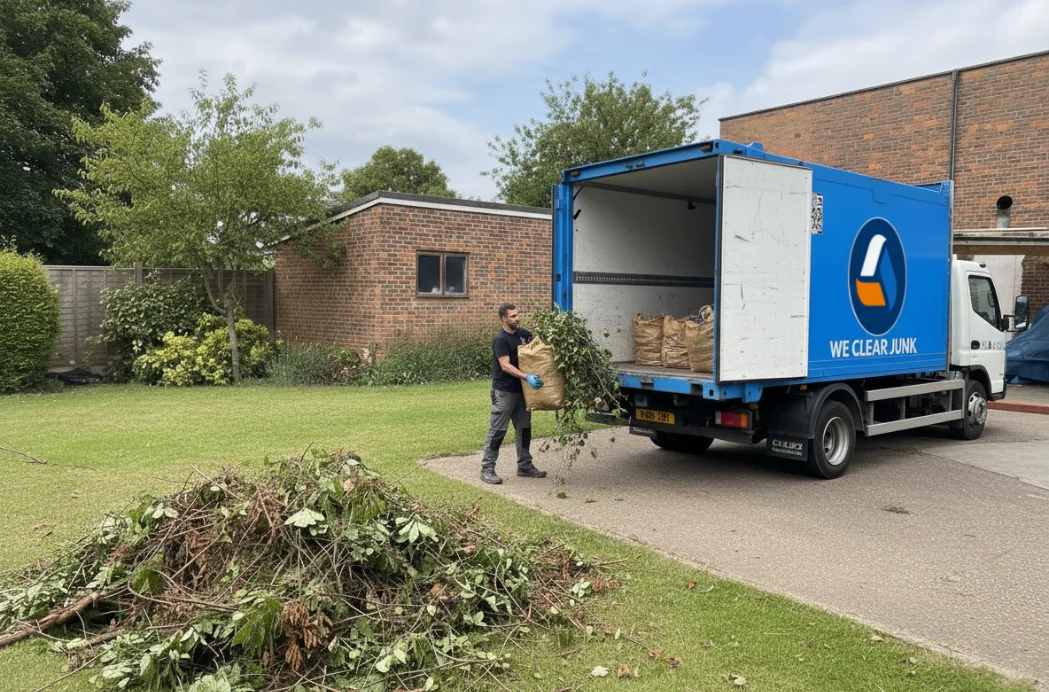
Garden waste removal is a common need for homeowners across the UK. From hedge trimmings and grass cuttings to bulky items like soil, branches, and old garden furniture, outdoor maintenance can generate more waste than a standard green bin can handle.
When this happens, most people search for garden waste removal cost to understand their options. The reality is that costs vary depending on several factors such as the amount of waste, type of disposal method, and location.
This guide breaks down everything you need to know about garden waste removal costs in the UK, including influencing factors, available disposal methods, and practical tips to keep expenses manageable.
What Counts as Garden Waste?
Before exploring costs, it’s important to know what qualifies as garden waste. The good news is that ANY bulky rubbish in your garden counts as garden waste, *when getting quotes from clearance companies like us. So anything blocking your side alley, or dumped in the garden is accepted and can be cleared away! The most common Garden Waste is:
- Grass cuttings and hedge trimmings
- Weeds, leaves, and plants
- Branches, logs, and tree stumps
- Soil, turf, and rubble from landscaping
- Old garden furniture, sheds, and fencing
- Plant pots, plastics, or other outdoor clutter
Since garden waste is a mix of organic and bulky items, the removal cost can differ depending on how much needs to be collected and how it’s disposed of. Also, it’s ALWAYS better for garden waste to be bagged or in bins / contained. This is because extra time may be required to bag loose Garden waste, and this can add cost.
Why Proper Garden Waste Removal Is Important
Leaving garden waste unmanaged isn’t just untidy—it can lead to several problems:
- Wasted Green Space – Green space is proven to be excellent for our mental health, so if you are lucky enough to have a garden, don’t waste it by letting rubbish accumulate.
- Pests and rodents – Piles of green waste can attract vermin.
- Blocked access – Waste can block side alleys, garden paths, or shared areas.
- Safety risks – Large branches or broken furniture can cause accidents.
- Environmental concerns – Incorrect disposal may add to landfill.
Arranging garden waste removal ensures your outdoor space is clear, safe, and environmentally responsible.
Factors That Affect Garden Waste Removal Cost
Garden waste removal cost in the UK depends on more than just how much waste you have. Here are the key factors:
1. Amount of Waste
The biggest factor is how much waste needs to be removed. A small load of grass clippings is very different from clearing several tonnes of soil or logs. More waste (by volume or weight) means higher cost (for larger vans, bigger skips, or additional labour, and disposal cost).
2. Type of Waste
Light green waste like leaves is easy to dispose of, but heavier materials such as soil, turf, or rubble require extra handling. Non-organic garden waste, such as fencing or old garden furniture, can also affect cost since it may need different disposal routes.
3. Accessibility
Is the waste in a front garden near the road, or does it need to be carried through narrow hallways or up steps? Poor access increases labour time and impacts the overall cost.
4. Disposal Method Chosen
The method of disposal plays a big role in cost. Options include man and van garden clearance, skip hire, council waste collection, or DIY disposal at a household waste recycling centre (or HWRC). Each comes with different pros and cons and cost implications. Eg: Skip hire often requires a parking permit, and many HWRC’s don’t accept VANS, or bagged DIY construction waste .
5. Location in the UK
Garden waste removal costs can differ depending on where you live. In urban centres where demand is higher, services may cost more compared to rural areas.
Garden Waste Disposal Options in the UK
To estimate garden waste removal cost, it helps to understand the most common disposal methods available:
1. Council Garden Waste Collection
Most local councils provide garden waste collection services. Typically, you are supplied with a green bin or bag for regular collections. This is useful for small amounts of waste like grass cuttings and leaves. However, restrictions apply, and bulky waste such as logs or soil is usually excluded.
2. Skip Hire
Hiring a skip is a popular solution for larger garden projects. A skip hire service is useful if you’re clearing a garden after landscaping, dealing with soil or rubble, or managing ongoing waste over several days. Keep in mind, skips require space on your property, and if placed on a public road, a permit may be necessary.
3. Man and Van Garden Clearance Services
A man and van service is one of the most flexible options. A professional team arrives, loads the waste, and ensures everything is disposed of responsibly. This is particularly useful for mixed garden waste, including bulky items like garden furniture, fencing, or tree stumps. Many providers also recycle a large percentage of collected waste.
4. DIY Garden Waste Disposal
Some people prefer to transport garden waste themselves to a recycling centre. This option avoids service fees but requires time, effort, and a suitable vehicle. It may also mean multiple trips if you’re clearing a large amount.
How Garden Waste Recycling Impacts Cost
While cost is a key concern, most UK garden waste removal services now focus on recycling. This matters because:
- Green waste (grass, leaves, plants) can be composted into soil improver.
- Wood and branches are often chipped for mulch or repurposed.
- Bulky non-organic items like furniture or pots can be recycled instead of going to landfill.
Recycling helps reduce disposal costs in some cases, since less material is sent to landfill where charges are higher. Choosing eco-friendly services often balances affordability with sustainability.
Tips to Manage and Reduce Garden Waste Removal Cost
There are practical ways to keep costs manageable while keeping your garden clear:
- Maintain Your Garden Regularly
Small, frequent clearances are cheaper and easier than occasional large-scale removals. - Compost at Home
A home compost bin reduces the need for professional collections and produces free soil conditioner. - Reuse and Repurpose
Logs can be cut for firewood, while branches can be shredded for mulch. This reduces the amount of waste needing removal. - Sort Waste Before Collection
Separating green waste from bulky items can make removal quicker and more efficient. - Share Services with Neighbours
If several households need garden clearance, splitting the cost of a man and van service or skip hire can save money.
Choosing the Right Garden Waste Removal Service
When comparing services, garden waste removal cost is important, but it shouldn’t be the only consideration. Look at:
- Licensing – Choose a licensed waste carrier to ensure legal disposal.
- Recycling Commitment – Ask how much waste is recycled versus sent to landfill.
- Service Flexibility – Can they handle both green waste and bulky items?
- Customer Reviews – Local feedback can highlight reliable providers.
- Convenience – Choose a service that suits your schedule and waste type.
Conclusion
Garden waste removal cost in the UK varies depending on waste type, volume, accessibility, disposal method, and location. While council collections work well for small amounts, larger or mixed waste often requires man and van services or skip hire.
The best way to manage costs is to stay organised—maintain your garden regularly, compost at home when possible, and choose eco-friendly services that recycle responsibly.
At We Clean Junk, we provide reliable garden waste removal tailored to your needs. Whether it’s small green waste or a full garden clearance, our team ensures responsible disposal. Book now to keep your garden clear, safe, and cost-effective.
Frequently Asked Questions About Garden Waste Removal
What is usually included in garden waste removal services?
Most services include collection, loading, transportation, and responsible disposal or recycling of your waste.
Can soil, turf, and rubble be included?
Yes, but these materials are heavier and may require special handling, making disposal more expensive compared to lighter green waste.
Is home composting a cheaper option?
Yes. Composting reduces the need for paid collections and provides free compost for your garden.
Can I put old furniture or fencing in with green waste?
No. These count as bulky garden waste and need different handling. A man and van clearance or skip hire is better for these items.
How often should I arrange garden waste clearance?
This depends on your garden size and maintenance habits. Some people use monthly council collections, while others book professional clearance after landscaping or seasonal projects.
Experienced Entrepreneur with a strong history of working in the Waste Logistics industry. Darren has led We Clear Junk’s operations since 2006, overseeing a 15-truck fleet across London.


