Getting rid of old furniture can feel like a chore, especially when you’re unsure where it should go. Whether you’re moving house, redecorating, or simply decluttering, it’s important to dispose of your unwanted furniture in a responsible and sustainable way. Across the UK, there are several easy options for old furniture collection and disposal, many of which are environmentally friendly and even support local charities. If you’re in London and want it gone quickly, our furniture removal service collects from your door.
The most responsible ways to dispose of old furniture in the UK are to donate or sell it if it is in good condition, book a council bulky waste collection, or use a licensed waste carrier such as a man and van service. Never leave furniture on the pavement, and always check that a collector holds an Environment Agency waste carrier licence. Worn-out items should go to a recycling centre or a licensed collector so usable parts are reused and recycled.
Here’s a complete guide to help you choose the best way to say goodbye to your old sofa, wardrobe, or dining table without sending it straight to landfill.
1. Donate Your Furniture to Charity
One of the most responsible ways to handle old furniture is to donate it to a UK charity. Many national and local charities offer free furniture collection services for reusable items that meet fire safety standards. Organisations such as the British Heart Foundation, Sue Ryder, and Emmaus will often collect directly from your home.
Before arranging a pickup, check that your items are:
- In good condition (no major rips, stains, or damage)
- Carrying a fire safety label (especially for sofas or mattresses)
- Fully assembled or safely disassembled
Your donation could help fund important causes and give someone else the chance to furnish their home affordably, a win-win for people and the planet.Items without a fire safety label are usually turned away, so check the label before you book.
2. Use a Council Bulky Waste Collection Service
Most UK councils provide a bulky waste collection service for large household items such as wardrobes, sofas, or broken furniture. This is a reliable way to ensure your old furniture is collected and processed safely.
The process usually involves:
- Booking a collection slot on your local council’s website
- Leaving your items outside on the scheduled day
- Following any local guidelines for what can and can’t be taken
This option is ideal if your furniture is too worn to donate but still needs proper disposal. However, it’s worth checking collection limits, as councils may only take a certain number of items at a time.Many councils also charge a fee per item or per slot, and waiting times can stretch to a few weeks, so book early.
3. Man & Van Furniture Removal
If you need a flexible and convenient option, a man and van furniture removal service is one of the easiest ways to clear out bulky items. These services are ideal when you’re moving, redecorating, or can’t wait for your council’s bulky waste collection slot.
A licensed man and van team will collect your old furniture directly from your home, load it safely, and ensure it’s taken to an authorised recycling centre or a reuse facility. Many providers in the UK focus on recycling or donating usable items to local charities, helping reduce waste that would otherwise end up in landfill.
When choosing a company, always check they:
- Hold a valid Environment Agency waste carrier licence
- Provide details on where your furniture will be taken
- Offer responsible disposal or donation options
- Can show their licence number, which you can check on the Environment Agency’s public register
A professional man and van furniture removal service saves you time, effort, and ensures your unwanted furniture is handled responsibly.
Furniture Collection in London with We Clear Junk
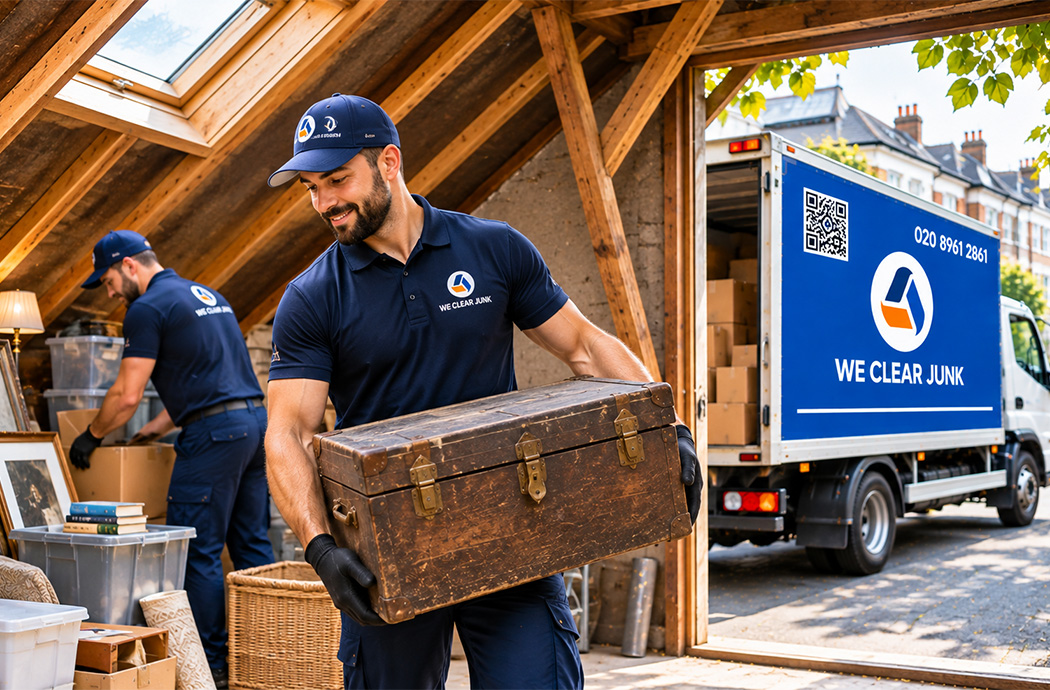
We Clear Junk has been collecting furniture across London since 2006, with a 15-truck fleet and a team that sorts items for reuse and recycling wherever possible. Our furniture removal service covers sofas, wardrobes, beds, tables and more, and if you need it gone fast, see our same-day rubbish removal service
4. Take Furniture to a Recycling Centre
If you can transport the furniture yourself, your nearest household waste recycling centre (HWRC) accepts a wide range of items. You can find your local recycling site on the Recycle Now website or your local council’s page.
Before loading up the car or van:
- Check the centre’s accepted materials list
- Separate wooden, metal, and upholstered furniture if required
- Ask staff where to place items for recycling or reuse
- Check whether you need proof of address and whether vans or trailers are allowed
Many centres have a dedicated reuse area, where usable furniture is repaired and resold at low cost through community projects.
5. Try Selling or Giving It Away Online
Not everything needs to go to waste, one person’s old armchair can be another’s vintage treasure. Online platforms like Facebook Marketplace, Gumtree, and Freecycle are great places to give away or sell second-hand furniture locally.
When listing your items:
- Include clear photos from different angles
- Write an honest description (include dimensions)
- Mention collection details or accessibility
This option helps extend the life of your furniture while freeing up space in your home.
6. Upcycle or Repurpose Your Furniture
If you enjoy DIY, upcycling is a creative way to breathe new life into old furniture. With a bit of paint, polish, or upholstery, you can turn a dated table into a modern statement piece or repurpose an old drawer into a stylish storage box.
Popular upcycling ideas include:
- Repainting wooden chairs or coffee tables
- Reupholstering fabric furniture
- Turning wardrobes into shelving units or TV stands
Upcycling not only saves money but also keeps materials out of landfill, a key step toward a more sustainable lifestyle.
7. Return Furniture to Retailers (Take-Back Schemes)
Some furniture retailers now offer take-back or recycling programmes when you buy new items. When replacing your sofa, bed, or mattress, ask if the company can collect the old one for recycling.
Large stores and eco-focused brands often partner with licensed recyclers to ensure materials are recovered and reused properly. It’s a convenient option for anyone upgrading their furniture while staying eco-conscious.
8. Give It to a Local Reuse Network or Community Project
Across the UK, community reuse networks and social enterprises focus on redistributing unwanted furniture to families in need. These organisations refurbish donated items and make them available at low or no cost to those setting up new homes.
You can find nearby projects through platforms like:
- Reuse Network (reuse-network.org.uk)
- Freegle (ilovefreegle.org)
- Local community Facebook groups or notice boards
It’s an excellent way to ensure your furniture continues to serve a purpose while supporting your local area.
9. Organise a House Clearance Responsibly
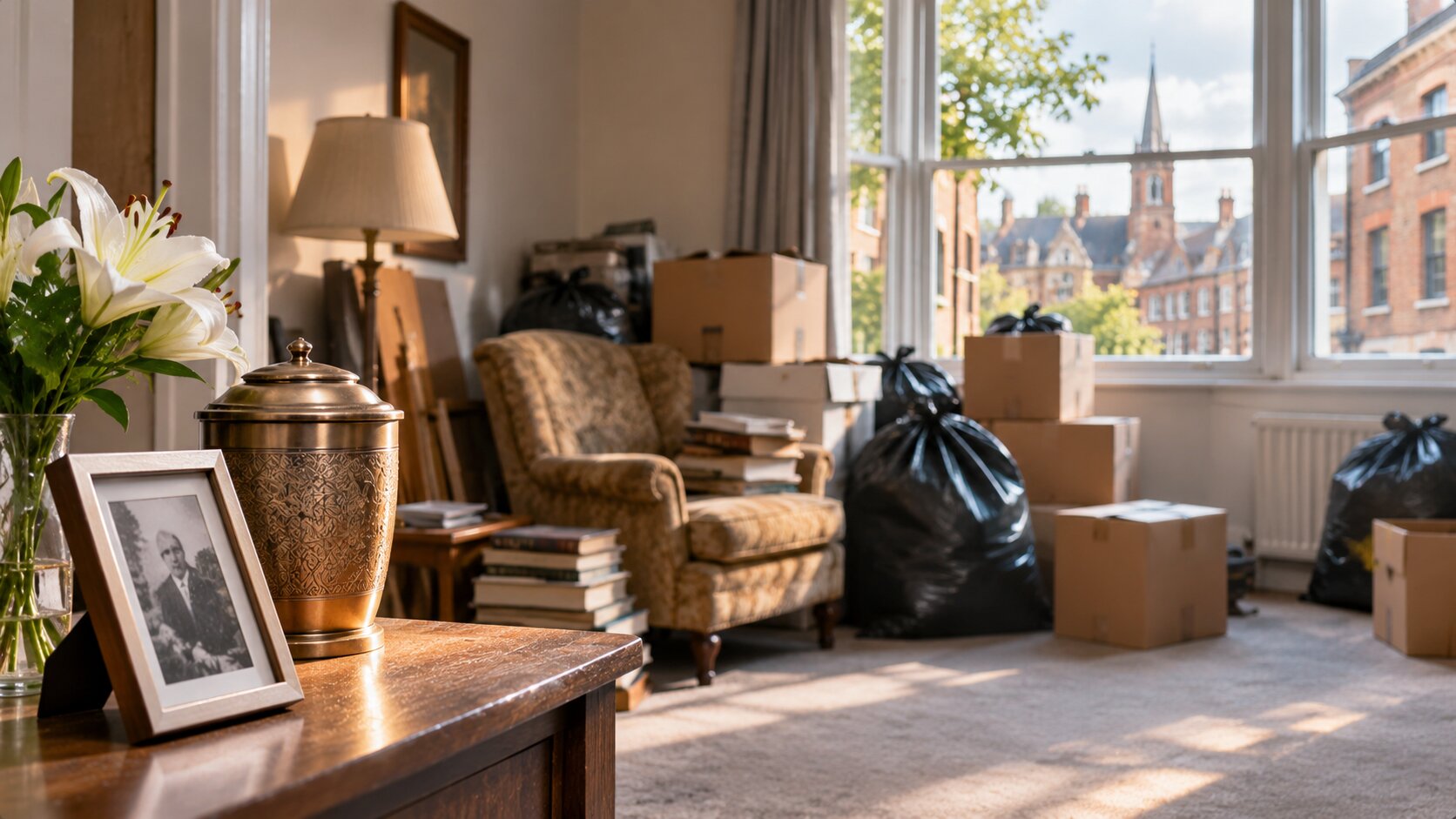
If you’re clearing out an entire property, perhaps after a move, renovation, or bereavement, it’s best to arrange a professional house clearance service. These teams handle everything from furniture and appliances to smaller household items, ensuring recyclable materials are separated correctly.
When choosing a clearance provider:
- Check for an Environment Agency waste carrier licence
- Ask where the waste is taken and how much is recycled
- Read reviews or testimonials to ensure reliability
Responsible clearance ensures that reusable furniture goes to good homes and waste is kept out of landfill wherever possible.
Old Furniture Disposal Options Compared
Not sure which route suits you? This table sets the main options side by side.
|
Option |
Typical cost |
Speed |
Takes worn-out furniture? |
Best for |
|
Charity collection |
Free |
Depends on charity availability |
No |
Clean, labelled items in good condition |
|
Council bulky waste |
Often a fee per item or slot |
Slowest: slots booked ahead |
Yes, within limits |
A few large items with no rush |
|
Licensed man and van |
Quote based on volume |
Fast, often within days |
Yes |
Moves, big loads, no vehicle |
|
Recycling centre (DIY) |
Usually free for households |
Immediate, you transport |
Yes, check the accepted list |
Small loads if you have a vehicle |
|
Sell or give away online |
Free, may earn money |
Depends on the buyer |
No |
Good-condition furniture |
How to Find the Cheapest Furniture Collector
Finding an affordable and reliable furniture collector in your area starts with comparing local options. Look for licensed companies with transparent policies about recycling, donation, and customer reviews. Local directories and online marketplaces can also help you identify trustworthy services nearby.
Questions to ask before you book:
- What is your waste carrier licence number?
- Does the quote include loading, transport and disposal?
- Where will my furniture be taken, and what will be reused or recycled?
- Can I have the price in writing before collection?
If you’re in the UK and prefer a simple, eco-friendly option, We Clear Junk offers convenient furniture collection services focused on responsible disposal and recycling. Always confirm that any provider you choose holds the necessary waste carrier licence and follows proper environmental standards.
Why Responsible Furniture Disposal Matters
In the UK, millions of tonnes of household waste used to end up in landfill every year, with furniture making up a significant portion. Many of these items could easily be reused, recycled, or repurposed.
But domestic seating often contains forever chemicals (often fire retardant chemicals). These “Persistent Organic Pollutants” or POPS should be destroyed. In the UK they must now be incinerated and not “recycled” to protect the environment. For the latest rules, see the Environment Agency’s guidance on waste containing persistent organic pollutants.
By choosing the right disposal method, you’re helping reduce carbon emissions, supporting charitable causes, and promoting a circular economy where products have a longer life.
It’s not just about clearing space, it’s about making mindful decisions that benefit both people and the environment.
Quick Tips for a Smooth Furniture Collection
- Check fire safety labels before donating upholstered items
- Disassemble large furniture to make transport easier
- Clean and photograph items before arranging collection
- Contact local charities in advance to confirm acceptance
- Never leave furniture on the pavement without permission
Final Thoughts
Disposing of old furniture doesn’t have to be difficult or wasteful. With options like charity collections, council bulky waste services, man and van furniture removal, and upcycling, there’s a sustainable solution for every household.
Next time you’re clearing out, take a few minutes to plan how your old items can find a new purpose. By doing so, you’ll make a small but meaningful contribution to a cleaner, greener UK.
Need old furniture collected in London? We Clear Junk covers the capital — get a free quote today.
FAQs
Can I leave old furniture outside my home for collection?
No, you shouldn’t leave furniture on the pavement unless it’s part of a booked council or charity collection. Unauthorised dumping can lead to fines for fly-tipping.
Will my local council take all types of furniture?
Not always. Most councils collect common household items such as sofas, wardrobes, tables and beds, but many set a limit on the number of items per booking, charge a fee, or refuse items like building materials and commercial waste. Check your council’s bulky waste page before you book.
Do charities accept all kinds of furniture?
No. Charities generally take furniture that is clean, in good condition and, for upholstered items, carries a fire safety label. Many will not accept mattresses, heavily worn pieces or anything damaged. Phone ahead to confirm before you arrange a pickup.
What happens to furniture after collection?
It is sorted at a transfer station or recycling facility. Items that can be reused are donated or resold, wood and metal are recycled, and residual waste goes to energy recovery. Upholstered seating that contains persistent organic pollutants (POPs) must be incinerated rather than recycled.
How do I check a furniture collector is licensed?
Ask for their waste carrier licence number and look it up on the Environment Agency’s public register. A legitimate collector will give it freely. If you hand waste to an unlicensed carrier and it is fly-tipped, you can be held responsible under your Duty of Care.
Can a sofa containing fire-retardant chemicals be recycled?
Not in the usual way. Domestic upholstered seating that contains persistent organic pollutants (POPs), often fire-retardant chemicals, must be destroyed by incineration in the UK so the pollutants do not re-enter the environment. A licensed collector will route these items correctly.
How much does furniture collection cost in London?
Price depends on the volume of furniture, access (stairs, parking, lifts) and how many items you have. A licensed collector should give you a clear quote before collection. We Clear Junk offers a free quote for furniture collections across London.