
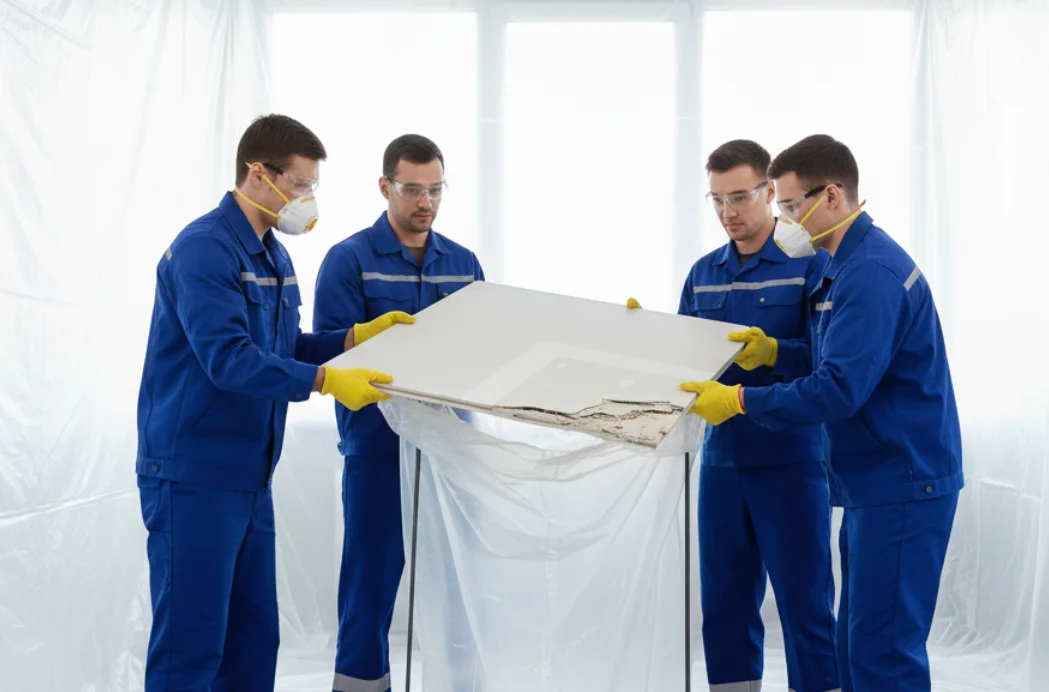
When it comes to home renovations or old property maintenance, one of the most serious hazards you might encounter is asbestos. Once widely used in UK homes for insulation, roofing, and floor tiles, asbestos is now recognised as a dangerous material that can cause severe health problems when its fibres are released into the air.
If you’ve discovered asbestos in your home, it’s crucial to handle it correctly, not just for your safety, but also to comply with UK environmental regulations. Professional waste clearance in London can help ensure asbestos and other hazardous materials are removed safely and responsibly. This guide will help you understand how to dispose of asbestos step by step.
What Is Asbestos and Why Is It Dangerous?
Asbestos refers to a group of naturally occurring minerals known for their strength, heat resistance, and insulating properties. Decades ago, it was a popular material in UK construction, used in roofing sheets, pipe lagging, floor tiles, cement, and even textured wall coatings like Artex.
However, asbestos is now banned because its fibres are highly toxic when inhaled. Over time, these microscopic fibres can lodge in the lungs and lead to diseases such as:
- Asbestosis – scarring of lung tissue
- Lung cancer
- Mesothelioma – a rare and aggressive cancer of the lining of the lungs
Because of these risks, you must never attempt to sand, cut, or break materials containing asbestos. Even minimal disturbance can release dangerous fibres into the air.
Identifying Asbestos in Your Home
Many homes built or refurbished before the year 2000 may contain asbestos. The most common places where asbestos might be found include:
- Roofing sheets or soffits in garages and sheds
- Cement panels on walls or ceilings
- Insulating boards around boilers, pipes, and water tanks
- Vinyl floor tiles and adhesives
- Textured coatings like old Artex ceilings
- Guttering, downpipes, or flue pipes
It’s not always possible to tell just by looking whether a material contains asbestos. The safest option is to have a sample tested by a UKAS-accredited asbestos testing laboratory. These professionals can confirm the presence and type of asbestos, allowing you to decide on the next steps.
Can You Remove Asbestos Yourself?
In some cases, householders can legally remove asbestos from their property, but only certain types and under strict safety conditions.
You should only consider DIY removal if:
- The asbestos is bonded (non-friable), such as cement bonded sheets or floor tiles
- The material is in good condition (not crumbling or damaged)
- You are confident you can handle and dispose of it without breaking it
- You follow the HSE guidelines for removing asbestos from the home
However, if the asbestos is loose, sprayed, or insulating (friable), it must be removed by a licensed asbestos removal contractor. Attempting to remove such materials yourself is illegal and extremely dangerous. In such cases, it’s best to arrange a Hazardous Waste Clearance service, where trained specialists handle, package, and dispose of asbestos safely in line with UK environmental regulations.
How To Dispose of Asbestos Safely
Once asbestos has been removed, either by you or a professional, it must be transported and disposed of properly. You cannot put it in your household bin or mix it with general waste. Here’s the correct process to follow in the UK:
1. Contact Your Local Council Asbestos Collection Service
Most local authorities in the UK offer asbestos disposal services for householders. Some councils provide special collection services for small amounts, while others direct you to a designated asbestos disposal site.
Visit your council’s website or call their waste management department to find out:
- Whether they collect asbestos waste
- The materials they accept (cement sheets, tiles, etc.)
- Packaging and transport requirements
- Booking and drop-off procedures
2. Prepare the Asbestos for Disposal
If you’re handling asbestos yourself, always wear personal protective equipment (PPE), including:
- Disposable coveralls with a hood
- Gloves
- A P3-rated face mask or respirator
- Safety goggles
Before moving the asbestos, lightly dampen the material with water to prevent fibres from becoming airborne. Then, wrap it securely in two layers of heavy-duty plastic sheeting (minimum 1000-gauge polythene) and seal it with strong tape. Clearly label the packages as “Asbestos Waste.”
Never break up large sheets or attempt to fit them into small bags, this increases exposure risk.
3. Transport the Asbestos Safely
If you’re taking asbestos to a local recycling or disposal centre yourself:
- Keep the materials double-wrapped and sealed
- Use a covered vehicle (preferably not the family car)
- Avoid carrying other waste in the same load
When you arrive, follow the instructions from site staff carefully, they will guide you to the correct disposal area. Some sites require prior booking, so always check in advance.
4. Use Licensed Waste Carriers for Large Amounts
For larger quantities or commercial premises, you’ll need to use a licensed asbestos removal contractor or registered waste carrier.
These professionals are trained to:
- Remove asbestos in compliance with UK Health and Safety Executive (HSE) guidelines
- Package and label the material safely
- Transport it to an authorised hazardous waste facility
- Provide a waste consignment note as proof of legal disposal
Many professional companies in the UK offer hazardous waste disposal solutions, ensuring that asbestos and other toxic materials are handled, transported, and processed in line with environmental safety standards. Choosing a trusted provider guarantees compliance and peace of mind.
What You Should Never Do
Even if you’re confident about DIY asbestos removal, avoid these common mistakes:
- Don’t use power tools, saws, or sanders, they release dangerous fibres.
- Don’t vacuum or sweep asbestos dust, this spreads contamination.
- Don’t put asbestos in general household bins, it’s illegal.
- Don’t store asbestos at home or in a shed, it poses ongoing risk.
- Don’t break or smash asbestos sheets, handle them whole and intact.
Always prioritise safety over convenience. If you’re unsure, it’s better to call professionals who are trained and licensed to handle asbestos safely.
Professional Asbestos Removal Services
If you discover asbestos in areas like insulation boards, pipe lagging, or ceiling panels, you’ll need specialist help. Licensed contractors have the right equipment and disposal routes to handle high-risk materials legally.
Professional services usually include:
- On-site assessment and sample testing
- Safe removal and packaging of asbestos materials
- Transportation to authorised disposal sites
- Certification confirming legal compliance
Choosing a professional ensures that all work is done according to HSE and Environment Agency regulations, giving you peace of mind.
Legal Requirements for Asbestos Disposal in the UK
Under the Control of Asbestos Regulations, anyone handling or disposing of asbestos must follow specific legal requirements. Key rules include:
- Only licensed contractors may handle high-risk asbestos materials.
- Asbestos waste must be disposed of at authorised hazardous waste facilities.
- Proper records (waste consignment notes) must be kept for all asbestos disposal.
Householders are exempt from licensing but must still ensure their asbestos waste is securely wrapped, labelled, and delivered to an approved site.
Failing to follow these rules can result in fines and legal penalties.
Environmental Impact of Improper Asbestos Disposal
Illegal dumping of asbestos, known as fly-tipping, poses serious risks to both the environment and public health. When asbestos materials are left in open spaces or mixed with general waste, the fibres can spread easily through air or soil.
Local councils spend thousands of pounds each year cleaning up fly-tipped asbestos, and offenders can face heavy fines or prosecution.
By following the proper disposal process, you help protect your community and the environment.
Conclusion
Asbestos disposal isn’t something to take lightly. It requires care, knowledge, and a commitment to safety. Whether you’re dealing with a few cement sheets in your garage or suspect insulation in your loft, never take unnecessary risks.
Experienced Entrepreneur with a strong history of working in the Waste Logistics industry. Darren has led We Clear Junk’s operations since 2006, overseeing a 15-truck fleet across London.


