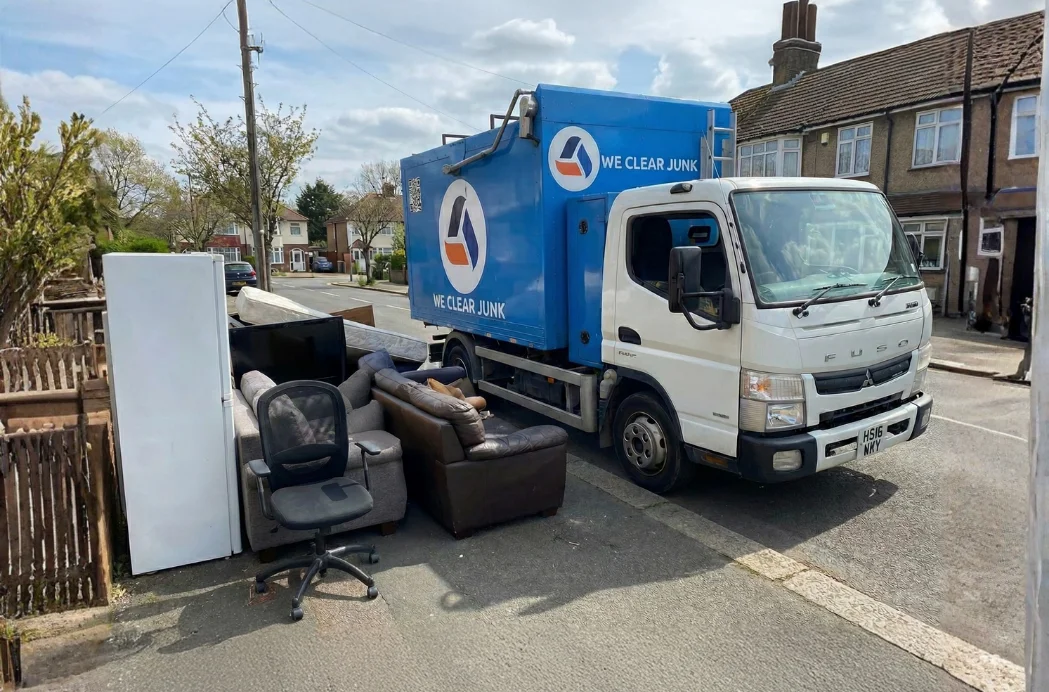
What’s the Difference Between Skip Hire and Construction Waste Removal?
They’re both ways to get rid of construction waste, but the experience is completely different. Skip hire means renting a steel container – typically for 7–14 days. It lands on your driveway or the road (permit required if it’s on a public road), you fill it yourself over the course of your project, and the skip company picks it up when you call. All the loading is on you. Construction waste removal – sometimes called builders waste removal – works the other way round. A team comes to you, loads everything, and takes it away in one trip. Nothing sits outside your property for days. You don’t lift a finger. Both are legitimate options for construction waste management. Which one makes more sense depends on your project size, your timeline, and what access is like on site.How Much Does Skip Hire Cost in the UK? (Realistic Price Ranges)
Skip hire pricing depends on the size of the container, where you are, and how long you need it. London is consistently pricier than the national average. Here’s what most people pay:| Skip Size | Typical London Cost | Best Suited To |
| Mini (2 yard) | £150–£200 | Garden clearance, small DIY |
| Small (4 yard) | £200–£280 | Single room renovation |
| Medium (6 yard) | £270–£380 | Kitchen or bathroom refit |
| Large (8 yard) | £320–£480 | Full house renovation |
| Maxi (12–16 yard) | £450–£650+ | Large commercial builds |
| Road permit (add-on) | £25–£75 | Required if not on private land |
How Much Does Professional Construction Waste Removal Cost?
Professional construction waste removal is priced by volume – usually per cubic yard or per van load. For London, here’s the rough picture:| Typical Construction Waste Removal Pricing (London) Small clearance (1/4 van load): £80–£150 Half van load: £150–£220 Full van load: £250–£380 Multiple loads / large site: £400–£700+ (volume-based) Labour is included in all of the above. |
Skip Hire vs Construction Waste Removal: Which Is Actually Faster?
Speed matters on most sites. Here’s where the two options genuinely differ.Skip hire timeline:
- Order a skip: usually 24–48 hours lead time for delivery
- Fill it over your hire period: typically 7–14 days
- Book a collection: usually 24–48 hours’ notice
- Total time on site: 7–16 days minimum
Construction waste removal timeline:
- Book a collection: same day or next day across most of London
- Team arrives, loads, and clears the site: typically 1–4 hours
- Total time on site: 1 day
What Hidden Costs Catch People Out With Skip Hire?
The price on the website is almost never what you end up paying. These are the extras that catch people out:- Road permits – if the skip can’t go on private land, you’ll need a council permit before it’s delivered – not after. In London that’s typically £40-£75, and it takes several days to arrange. Getting caught without one is a fixed penalty notice waiting to happen.
- Overweight surcharges – skips have weight limits, and heavy building waste disposal materials – concrete, soil, tiles, bricks – pile on weight fast. Go over and you’ll be invoiced for it, often at a rate you weren’t expecting.
- Plasterboard separation – plasterboard has to be disposed of separately under UK regulations. Many skip companies either refuse it or add a significant premium. Our plasterboard recycling service handles it without the surcharge drama.
- Extended hire fees – projects overrun. Most do. A 7-day hire that stretches to 10 days means daily extension charges, usually billed automatically.
- Prohibited items – asbestos, tyres, paint, and fridges can’t go in a standard skip. If they turn up in the load, you could be looking at penalty charges or a flat-out refusal to collect.
Which Option Is Better for Construction Waste Recycling?
If your project generates timber, metals, aggregates, or plasterboard in any real volume, how those materials are handled matters – both for the environment and, increasingly, for compliance. Construction waste recycling is a real consideration, not just a nice-to-have. Skip hire can support recycling, but only if you do the segregation yourself before anything goes in – which most people don’t. Mixed loads typically end up at a transfer station where sorting is patchy at best. You’re unlikely to get any documentation on what actually got recycled. Professional building waste removal services operate under Environment Agency licences and are required to provide waste transfer notes. That means a documented record of exactly how your waste was handled – genuinely useful if you’re working on a project with sustainability requirements or BREEAM targets. Our builders waste removal team sorts and diverts as much material as possible from landfill.Skip Hire vs Construction Waste Removal: Which Should You Go With?
Here’s the full comparison in one place:| Factor | Skip Hire | Construction Waste Removal |
| Cost (small job) | £200–£350 (skip + permit) | £150–£280 (load & go) |
| Cost (large job) | £400–£600+ (large skip + extras) | £300–£500 (volume-based) |
| Speed | 1–5 days (hire period + wait) | Same day or next day |
| Permit needed? | Yes, if on public road (£25–£75) | No |
| Labour included? | No – you load it | Yes – team loads everything |
| Recycling records | Limited documentation | Waste transfer notes provided |
| Mixed waste | Restrictions apply | Most types accepted |
| Best for | Long projects with steady waste | One-off clearances, fast turnarounds |
Frequently Asked Questions
Do I need a permit for a skip in London?
Yes, if the skip is going on a public road or pavement. You’ll need a permit from your local council before the skip is delivered – not after it arrives. In London, this typically costs £40–£75 and takes a few days to come through. If the skip fits on your driveway or private land, no permit is needed.
Can I mix all types of building waste in a skip?
Not everything can go in together. Plasterboard has to be separated under UK regulations – it can’t mix with general construction waste. Heavy stuff like soil, concrete, and bricks often triggers additional weight charges. Asbestos, tyres, and paint are prohibited outright. A professional clearance service handles most mixed loads without any of those restrictions.
How quickly can you collect construction waste in London?
Is construction waste removal better for the environment than skip hire?
Often, yes. Licensed clearance services are required to document how waste is handled, which makes it far easier to demonstrate that materials are being sorted for construction waste recycling rather than going straight to landfill. Ask for waste transfer notes – they’re your proof.
What's the cheapest way to dispose of builders waste in London?
For smaller volumes, professional clearance can actually work out cheaper than skip hire once you factor in the permit, loading time, and potential surcharges. For large, slow-burning projects, a skip may still win on cost. The best move is to get a quote for both and compare the real total – not just the skip headline price.
Ready to Clear Your Construction Site? Get a Quote Today
Whether it’s a single van load from a bathroom refit or a full site clearance at the end of a major build, We Clear Junk has been handling construction waste removal across London since 2006. No permits, no loading, no hidden charges – just a team that turns up, clears the waste, and gets out of your way.
Call us or get a quote online through our construction waste clearance page. We’ll give you a straight price based on what you’ve got – no guesswork, no surprises.