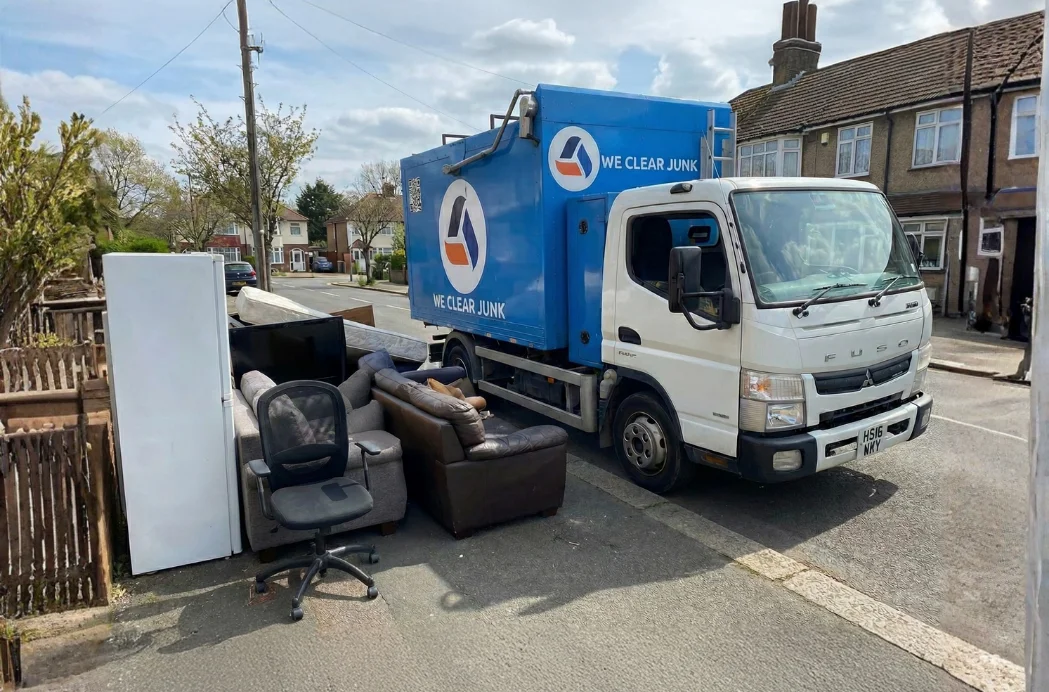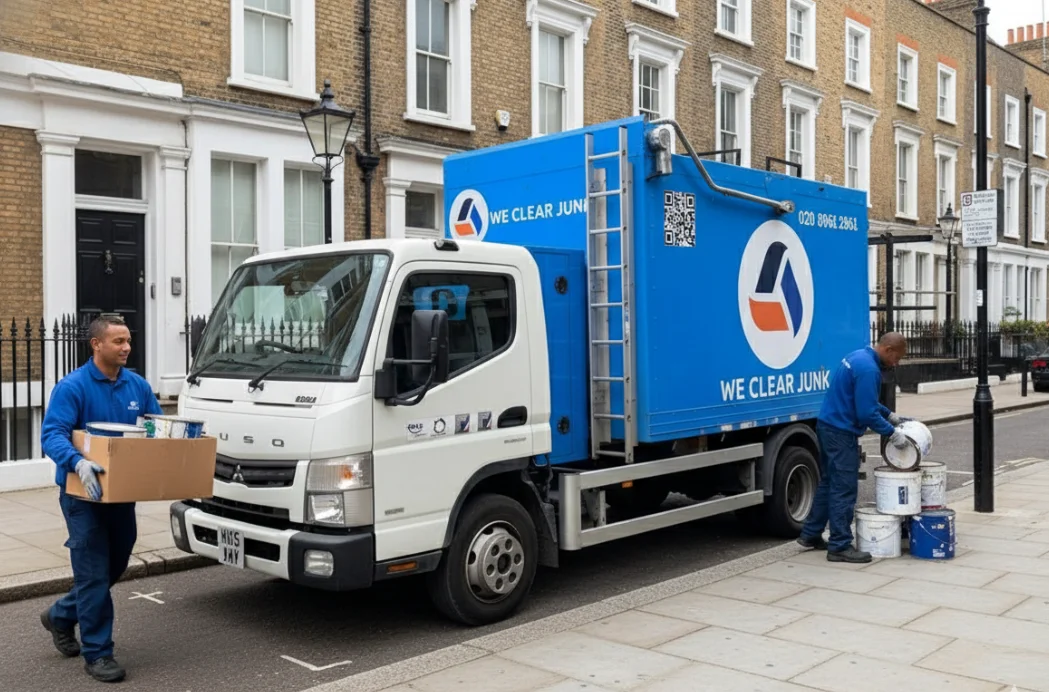
The lorry pulls away. Your bins are empty. Job done – right?
Not quite. For most residents, that moment marks the start of a journey most people never think about. Whether it’s your weekly rubbish, a pile of garden clippings, or a van full of builders’ rubble, every type of waste follows a different path once it leaves your property.
Understanding that journey matters – not just for curiosity, but because how you sort, present, and dispose of your waste directly affects how much of it gets recycled rather than landfilled. Here’s the full picture.
Step 1: The Collection Vehicle – Sorting Starts at the Kerb
Modern waste collection in London begins with separation. Many councils and private operators now use multi-compartment vehicles that keep dry recyclables, food waste, and general rubbish separate from the moment they’re loaded.
Co-mingled collections — where everything goes in one compartment — are still used, but these require more intensive sorting downstream. The type of vehicle and collection method used by your provider directly affects what percentage of your waste is ultimately recycled.
For households and businesses using professional waste collection services, a licensed operator will load, transport, and route your waste to the appropriate facility based on what it contains.
Step 2: Arriving at the Sorting Facility
Once collected, most mixed waste in London travels to a Materials Recovery Facility (MRF). These large industrial sites use a combination of conveyor belts, rotating drum screens, optical sensors, magnets, and eddy current separators to automatically sort materials by type.
Paper and cardboard are separated first. Metals are pulled out magnetically. Optical sorters use infrared cameras to identify and blast different plastics into separate streams. What remains after sorting is the residual fraction — the material that can’t be recovered.
This is where general waste collection and recyclable collection diverge sharply. Clean, well-sorted recycling moves through an MRF efficiently. Contaminated or poorly sorted loads are more likely to end up rejected – or worse, sent to landfill.
What Happens to Each Type of Waste?
Garden and Green Waste – From Your Garden to Compost
Garden waste collection and green waste collection follow one of the most satisfying recycling routes of all. Grass cuttings, leaves, hedge trimmings, and plant material are transported to licensed composting facilities where they’re shredded and processed through in-vessel composting or large open-air windrow systems.
The end product — a rich soil improver — is certified to PAS 100 standards and sold back to farms, landscapers, and local authorities. Your garden trimmings genuinely become next season’s growing medium.
If you’re clearing a larger garden, our garden waste clearance service ensures everything is collected and processed responsibly.
Food Waste – Powering Homes Through Anaerobic Digestion
Separately collected food waste in London is typically sent to Anaerobic Digestion (AD) plants. Inside sealed tanks, microorganisms break down organic matter in the absence of oxygen, producing biogas — which is used to generate electricity and heat — and digestate, a nutrient-rich liquid used as agricultural fertiliser.
It’s a closed loop: food scraps from a London restaurant can generate power for the grid and nutrients for a farm within weeks.
Bulky Waste – Reuse Before Disposal
Bulky waste collection — sofas, mattresses, white goods, large furniture — follows a tiered approach. Usable items are first assessed for donation to charity resale partners or reuse centres. Items that can’t be reused are stripped for recyclable components before anything reaches the landfill.
If you need a sofa or old appliances removed, our sofa and mattress removal and electrical appliances removal services handle the full process with responsible disposal built in.
Construction and Builders Waste – Crushing Back to Raw Material
Construction waste collection and builders waste collection are among the most recyclable streams in the industry — yet also one of the most commonly fly-tipped. Concrete, bricks, tiles, and aggregates are crushed and screened into recycled aggregate, which is then used as sub-base material for new construction projects.
Timber from construction sites is chipped into biomass fuel or processed into panel boards. Metals are separated and sent to scrap merchants.
Our construction waste clearance and builders waste removal services in London ensure your site waste is handled compliantly — with full waste transfer notes provided.
Electronic Waste (WEEE) – Recovering Precious Metals
Electronic waste and WEEE collection is governed by strict UK regulations. Licensed processors dismantle devices by hand and machine, recovering gold, silver, copper, palladium, and rare earth metals from circuit boards and components. Batteries are separately treated to extract lithium, cobalt, and nickel.
Nothing goes in a skip. Every item requires a documented chain of custody from collection through to the certified reprocessor.
Our electrical appliances removal service covers WEEE-compliant collection across London.
Hazardous Waste – Strict Regulated Treatment
Hazardous waste collection – covering asbestos, chemicals, contaminated soils, fluorescent tubes, and certain paints – never enters a standard MRF. It is transported in sealed, labelled containers by specially licensed carriers to permitted treatment facilities.
Treatment depends on the material: some hazardous waste undergoes high-temperature incineration, others are chemically stabilised or sent to specially lined hazardous landfill cells. Every movement is tracked under the Hazardous Waste Regulations 2005.
Our hazardous waste clearance team handles safe collection and compliant disposal across London.
General Waste – The Last Resort
Despite best efforts, not everything can be recycled. General waste collection residuals — contaminated packaging, mixed materials, non-recyclable plastics — are either sent to Energy from Waste (EfW) incineration plants, where they generate electricity, or to engineered landfill sites as a last resort.
London is served by several major EfW facilities that process hundreds of thousands of tonnes of residual waste each year, diverting it from landfill while generating power for the grid.
Does Sorting Your Waste at Home Actually Make a Difference?
Yes — significantly. When households and businesses present waste well-sorted, more of it passes through MRF sorting and reaches reprocessors in usable condition. Contamination — food residue on cardboard, liquids in plastic bottles, non-recyclables in recycling bins — causes entire loads to be rejected.
For household waste collection, this means rinsing containers, flattening cardboard, and keeping food waste separate. For businesses arranging commercial waste collection or business waste collection, it means working with a provider who offers the right segregated streams for your waste types.
If you’re looking for reliable waste collection near me across London, We Clear Junk offers fully licensed, same-day and scheduled collection for all waste types – with responsible disposal at every step.
FAQs
What happens to general waste after collection in London?
General waste that can’t be recycled is sent to Energy from Waste (EfW) incineration facilities, where it generates electricity, or to engineered landfill sites. Proper sorting at source reduces the volume of general waste collection ending up in these facilities.
How is garden waste collected and processed?
Garden waste collection loads are taken to licensed composting facilities where organic material is shredded and composted into certified soil improver. This is then used in agriculture and landscaping — a genuine circular process.
What is a Materials Recovery Facility (MRF)?
An MRF is an industrial sorting facility where mixed recyclables are separated by type using conveyor belts, magnets, optical sorters, and air jets. Most kerbside recycling and commercial waste collection passes through an MRF before reaching reprocessors.
Can businesses arrange commercial waste collection in London?
Yes. Licensed waste carriers offer scheduled and on-demand commercial waste collection and business waste collection across London, covering general, recycling, food, and specialist waste streams. A waste transfer note is legally required for every commercial collection.
What should I do with hazardous waste - can it go in a skip?
No. Hazardous waste collection must be handled by a licensed specialist carrier. Items such as asbestos, chemicals, and fluorescent tubes cannot go in standard skips or general waste bins. Our hazardous waste clearance service provides fully compliant collection and disposal.