
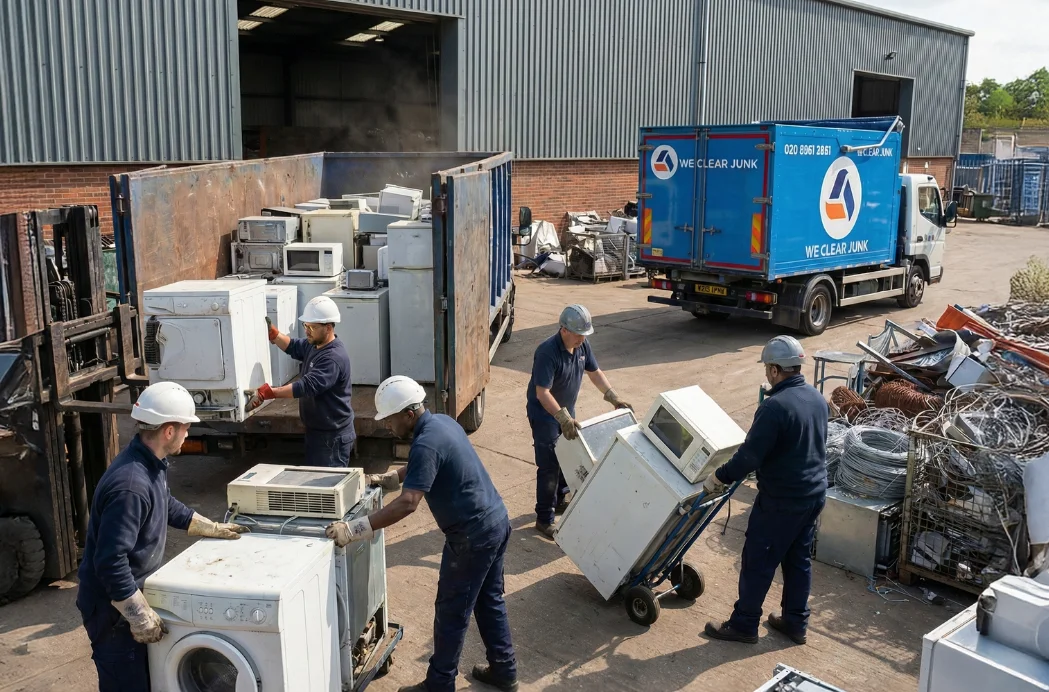
Disposing of old appliances is not as simple as placing them next to your household waste. In the UK, white goods fall under WEEE (Waste Electrical and Electronic Equipment) regulations, which require these items to be collected, handled, and recycled in a safe and controlled manner. Whether you’re replacing a fridge, upgrading a washing machine, or clearing out a property, understanding how to responsibly get rid of these appliances helps protect the environment and ensures you remain compliant with UK laws.
White goods are large household appliances such as fridges, freezers, washing machines, cookers, dishwashers, and tumble dryers. Many of these contain wiring, oils, metals, and refrigerants—materials that can be hazardous if not handled properly. This is why WEEE regulations ensure they are dismantled and recycled safely.
Why You Can’t Throw White Goods in Regular Waste
White goods cannot be disposed of with general waste for several reasons. First, many appliances contain hazardous substances such as refrigerant gases, oils, heavy metals, and lubricants. These can leak into soil or water sources if not handled correctly. Secondly, UK WEEE regulations require electrical appliances to be recycled properly, allowing for the recovery of metals like steel, copper, and aluminium. Throwing such items into general waste is not only unsafe — it is illegal. Improper disposal can also lead to fines and penalties, as fly-tipping or leaving appliances on the street without a scheduled collection is considered an offence. To protect the environment and avoid legal issues, proper disposal is the only acceptable option.
White Goods & Electrical Appliances Removal – Items We Collect
Most licensed waste removal services offer complete white goods and electrical appliances removal, covering a wide range of household and commercial items. This includes:
- Fridge-freezers
- Ovens & cookers
- Dishwashers
- Washing machines
- Electric heaters
In addition to these major appliances, services also commonly collect smaller electrical items such as microwaves, extractor hoods, and mini-fridges. More specialised equipment — including air conditioners, dehumidifiers, boilers, and large commercial refrigeration units — can also be removed safely.
Whether the appliance is still working or completely broken, professional teams ensure every item is transported securely and processed through WEEE-compliant recycling facilities.
Your Responsible Disposal Options
There are several safe and legally compliant ways to dispose of white goods in the UK.
One of the most environmentally friendly options is to donate your appliance if it is still in working condition. Charities, reuse centres, and community groups often accept large appliances, provided they are clean, safe, and fully functional. This keeps the appliance in use longer and reduces waste.
Another convenient method is to use retailer take-back schemes. Many high-street and online retailers offer to collect your old appliance when delivering a new one. These take-back services are usually WEEE-compliant and provide a simple, affordable way to recycle unwanted items.
Local councils also provide bulky waste collections for appliances. This involves booking a pickup date and placing your appliance outside your property on the scheduled day. While this option is reliable, it often comes with waiting times, a small fee, and restrictions on how many items can be collected at once.
For those who prefer to drop items off themselves, most Household Waste and Recycling Centres (HWRCs) accept white goods. However, you must be able to transport the appliance safely, and not all centres accept fridges or commercial appliances. Proof of residency may be required.
For the quickest and most hassle-free solution, professional white goods removal services are often the best choice. These services offer same-day or next-day collection, handle heavy lifting, and ensure all materials are disposed of responsibly. They’re especially useful for landlords, businesses, or homeowners who need fast, reliable clearance.
How to Prepare Your White Goods for Disposal
Before disposing of your appliance, it’s important to prepare it properly. Begin by switching off the appliance and unplugging it from the mains. If you’re disposing of a washing machine or dishwasher, disconnect the water supply and drain any remaining water from the hoses and internal system. You should also remove any food or items from inside fridges, freezers, or dishwashers and give the interior a quick clean to prevent odours.
For safety reasons, fridge and freezer doors should be removed or secured shut before collection so they cannot trap children or pets. Additionally, check for any leaks or damages, especially in appliances containing refrigerants. Finally, tape down any loose shelves or drawers to prevent them from shifting during transport.
Step-by-Step: How to Dispose of an Old Appliance Responsibly
Step 1: Assess Whether the Appliance Can Still Be Used
Check if the appliance is still in working condition. If it functions well or only needs minor repairs, donating it is the most sustainable option.
Step 2: Decide If Disposal Is Necessary
If the item is broken, outdated, unsafe, or too costly to repair, it’s time to choose a responsible disposal method.
Step 3: Choose the Right Disposal Method
Select the option that best suits your needs:
- Council bulky waste collection
- Household recycling centre drop-off
- Retailer take-back scheme
- Professional licensed removal service
Step 4: Complete the Collection or Drop-Off
Ensure the appliance is safely picked up by the service provider or transported to the recycling centre.
Step 5: Confirm WEEE-Compliant Recycling
Check that the appliance is being processed at a WEEE-compliant facility. This ensures safe handling, environmentally responsible disposal, and maximum material recovery.
What Happens to White Goods After Collection?
Once collected, white goods go through several important stages of processing. The appliance is first assessed and sorted to determine the correct recycling stream. Hazardous components such as gases, oils, and harmful chemicals are removed by trained technicians to ensure safe handling. After this, the appliance is dismantled into separate materials such as metal, plastic, foam, and glass. These components are then cleaned and prepared for recycling. Metals are often melted down and reused in manufacturing, while plastics can be processed into new products. Any non-recyclable materials are disposed of responsibly, following strict environmental guidelines.
Costs of White Goods Disposal in the UK
The cost of white goods disposal varies across the UK depending on the method. Council bulky waste collections typically charge a small fee per item and may have waiting periods. Retailer take-back schemes also charge a modest fee and are usually arranged at the time of purchasing a new appliance. Recycling centre drop-offs are usually free, but you must transport the appliance yourself. Professional removal services tend to cost more than council collections but offer faster, more convenient solutions and include lifting, transportation, and WEEE-compliant disposal.
Common Mistakes to Avoid
- Leaving appliances outside without booking a collection
Placing white goods on the street or outside your property can be considered fly-tipping and may result in fines. - Trying to dismantle fridges or freezers yourself
Breaking these appliances can release harmful refrigerant gases that require specialist handling. - Not draining washing machines before disposal
Failing to remove leftover water can lead to leaks, damage, and messy removal. - Underestimating the weight of appliances
Moving heavy items like washers or ovens without proper help or equipment can cause injuries. - Ignoring proper disposal guidelines
Not following approved methods can result in environmental harm and potential legal issues.
When You Need Professional Help
Professional disposal services are essential when dealing with particularly heavy or hazardous appliances. If you are unable to move an item safely, if the appliance is leaking, or if you need urgent same-day collection, a licensed removal team is the safest option. Professionals have the training, equipment, and vehicles needed to handle awkward or dangerous items, making the process stress-free and compliant with environmental laws.
Conclusion
Disposing of old white goods responsibly is not only a legal requirement in the UK but also an important step in protecting the environment. From hazardous materials like refrigerant gases to valuable metals that can be recycled, these appliances must be handled with care and processed through approved WEEE-compliant channels. Whether you choose to donate a working appliance, use a council collection service, drop it off at a recycling centre, or hire a licensed removal team, following proper guidelines ensures your old appliances are dealt with safely and sustainably.
By preparing your appliance correctly, avoiding common mistakes, and choosing the right disposal method, you can make the process simple, efficient, and environmentally friendly. And when an item is too heavy, too hazardous, or requires urgent collection, professional white goods removal services offer the safest and most convenient solution. Responsible disposal not only keeps your home clutter-free — it also contributes to cleaner communities and a healthier planet.


