
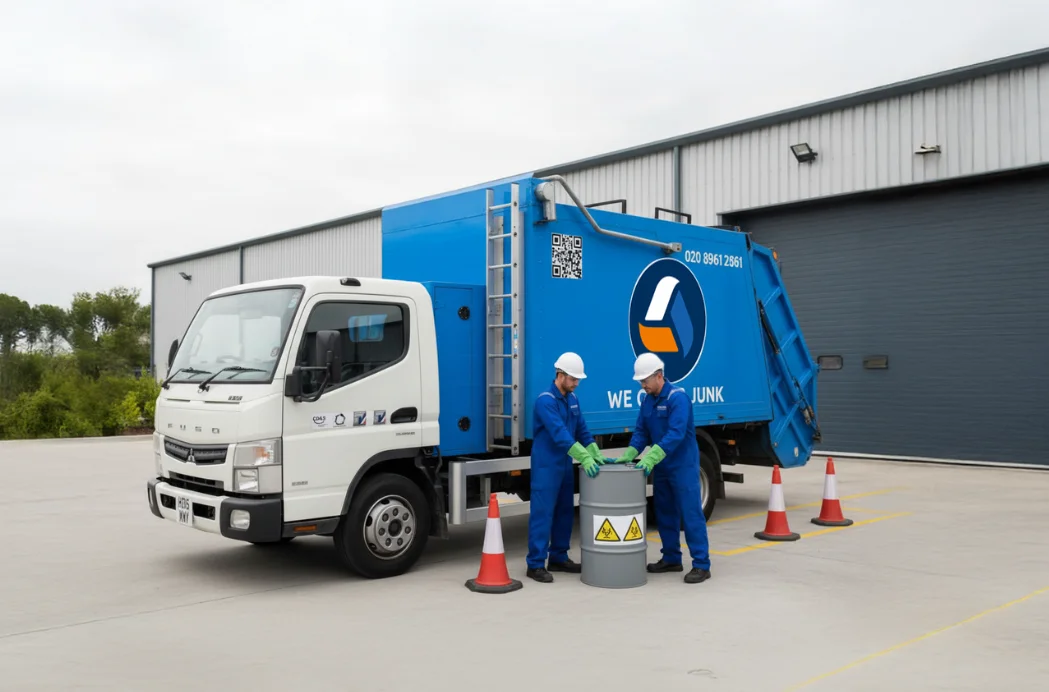
If you’re trying to work out the hazardous waste disposal cost for your next collection, here’s what you need to know. When it comes to managing hazardous waste in the UK, safety and compliance are just as important as keeping costs under control. Whether you’re a homeowner clearing out old paint tins or a business dealing with chemical by-products, understanding how hazardous waste disposal prices are determined can help you make informed, budget-friendly decisions, while staying fully compliant with UK waste regulations.
In this guide, we’ll explore what affects the cost of hazardous waste disposal, how the process works, and how to find affordable yet responsible collection services across the UK.
What Counts as Hazardous Waste?
Hazardous waste isn’t just about toxic chemicals. It covers any material that could pose a risk to people or the environment if not handled correctly.
Common examples include:
- Fridges, Monitors & TVS
- Empty containers with residual chemicals
- Paints, solvents, and adhesives
- Batteries and aerosols
- Cleaning agents and disinfectants
- Fluorescent tubes and electrical components
- Oils, fuels, and chemical containers
Hazardous Waste that requires very specific treatment & disposal procedures:
- Asbestos and contaminated building materials – see our guide on safely disposing of asbestos
- Clinical or medical waste – see how to dispose of clinical waste
If you’re unsure which category your waste falls into, our guide to the different types of hazardous waste covers this in more depth.
Both households and businesses generate hazardous materials, but the way they’re handled and the legal responsibilities can differ. Businesses must ensure their waste is collected and treated by a licensed waste carrier, households often rely on local council recycling centers, approved disposal companies, or professional household waste clearance services to safely handle leftover chemicals, paints, and other hazardous materials.
Hazardous Waste vs Non-Hazardous Waste – What’s the Difference?
This trips a lot of people up, so here’s a quick comparison:
|
| Hazardous Waste | Non-Hazardous Waste |
| Examples | Paints, solvents, batteries, asbestos, clinical waste, fluorescent tubes | General household rubbish, cardboard, untreated wood, garden waste |
| Handling | Licensed carrier, UN-approved packaging, consignment notes | Standard waste transfer note |
| Cost impact | Higher – specialist treatment required | Lower – standard collection/recycling rates |
| Legal framework | Hazardous Waste Regulations 2005 | Environmental Protection Act 1990 (general duty of care) |
If your waste is a mix of both, tell your collection company upfront – separating hazardous items before collection is one of the easiest ways to reduce costs.
Why Proper Disposal Matters
Improper disposal of hazardous waste can lead to soil contamination, water pollution, and health risks. In the UK, businesses are legally obligated to manage their waste responsibly under the Environmental Protection Act 1990 and Hazardous Waste Regulations 2005.
Did you know?
Your average fluorescent bulb contains a small amount of mercury (around 4-5 milligrams) but if it were all collected and dissolved, it could contaminate approximately 22,000 litres of water! (In reality, don’t overly stress if you break a bulb, the amount released is small and as long as it’s not dissolved in water, it dilutes quickly in the air) Mercury disposal cost is factored into specialist WEEE recycling rates for exactly this reason.
Failing to follow these regulations can result in heavy fines and reputational damage. Beyond the legal risks, using a licensed hazardous waste collection service ensures that all materials are safely treated, recycled where possible, and documented with the appropriate consignment notes proof that your waste was handled properly.
Hazardous Waste Disposal Cost Guide: UK Price Table
Here’s how to compare hazardous waste disposal prices in the UK by category. These are indicative per-tonne ranges – your exact hazardous waste disposal cost per ton will depend on quantity, packaging condition, and location, so always confirm with a site-specific quote.
| Waste Type | Typical Cost Per Tonne (UK) |
| General/mixed hazardous waste | £300 – £600 |
| Chemical waste (paints, solvents, adhesives) | £400 – £800 |
| Batteries | £250 – £500 |
| Fluorescent tubes & WEEE | £300 – £600 |
| Waste oils | £150 – £350 |
| Clinical/medical waste | £600 – £1,200 |
| Asbestos (bonded) | £200 – £400 |
| Asbestos (friable/loose) | £600 – £1,000+ |
For smaller loads – a few tins of paint, a handful of batteries, one broken monitor – most licensed collectors price per item or per van load rather than per tonne, so don’t assume you need a full tonne of waste to book a collection.
If you’re dealing with liquid waste specifically, “how much does liquid waste removal cost” is one of the most common questions we get – waste oils and liquid chemicals are usually priced by the litre or drum rather than weight, and cost more than dry waste of the same volume due to handling and containment requirements.
How Hazardous Waste Disposal Works
The process typically involves several steps, each of which contributes to the overall hazardous waste disposal cost:
- Waste identification: The type of waste (chemical, electronic, clinical, etc.) determines how it must be handled. Always ensure labels on containers are clear – if they are fading, keep a record or add a sticker / new label showing the exact chemicals contained.
- Segregation and packaging: Certain materials must be separated, labelled, and packaged in UN-approved containers.
- Collection and transportation: Licensed carriers collect the waste and transport it safely to an authorised treatment facility.
- Treatment or disposal: Waste may be incinerated, neutralised, recycled, or sent to specialist landfill sites, depending on its composition.
- Documentation: Businesses must keep waste transfer and consignment notes for legal compliance.
Every stage requires expertise, specialist equipment, and documentation which explains why costs can vary widely depending on your specific needs.
Key Factors That Influence Hazardous Waste Disposal Prices
Although every job is different, several consistent factors affect hazardous waste disposal prices across the UK:
1. Type of Waste
Chemical waste, batteries, asbestos, and clinical waste all have different handling and treatment requirements. Hazardous waste containing toxic or flammable materials often requires more complex disposal methods. *IF the label is not clear, you’ll need a chemist to sample and test the contents, and of course, this adds cost.
2. Quantity and Weight
The more waste you have, the higher the handling and transport costs. Some companies offer reduced rates for bulk or scheduled collections, which can be more economical for businesses.
3. Location
Collection services in remote areas may cost slightly more due to transport distances. Urban areas including London might benefit from more competitive rates thanks to local disposal facilities.
4. Packaging and Storage
Hazardous materials often need to be stored and transported in secure, labelled containers. If you don’t have the right packaging, the disposal company will usually provide it, adding to the total cost.
5. Frequency of Collection
Regular contracts for industrial or commercial sites can help lower the cost per collection compared to one-off pickups.
6. Disposal Method
Recycling, incineration, and chemical treatment all have different cost structures. Recycling is often cheaper and more sustainable when possible.
How Long Can You Store Hazardous Waste On-Site?
Under UK hazardous waste regulations, there are limits on how long you can legally store hazardous waste before it must be collected – and storage itself has rules around labelling, containment and site security. Storing waste incorrectly, or for too long, is one of the most common compliance failures we see, particularly for businesses trying to batch up waste to save on collection costs. If you’re holding hazardous materials on-site, get advice on your specific storage limits before it becomes a liability rather than a saving.
How Hazardous Waste Disposal Works?
The process typically involves several steps, each of which contributes to the overall hazardous waste disposal cost:
- Waste identification: The type of waste (chemical, electronic, clinical, etc.) determines how it must be handled. Always ensure labels on containers are clear – if they are fading, keep a record or add a sticker / new label showing the exact chemicals contained.
- Segregation and packaging: Certain materials must be separated, labelled, and packaged in UN-approved containers.
- Collection and transportation: Licensed carriers collect the waste and transport it safely to an authorised treatment facility.
- Treatment or disposal: Waste may be incinerated, neutralised, recycled, or sent to specialist landfill sites, depending on its composition.
- Documentation: Businesses must keep waste transfer and consignment notes for legal compliance.
Every stage requires expertise, specialist equipment, and documentation which explains why costs can vary widely depending on your specific needs.
Finding the Right Hazardous Waste Clearance Service
Choosing a reputable waste management company – whether you’re searching “hazardous waste disposal near me” or comparing quotes for a scheduled contract – ensures your hazardous waste is handled safely and legally. Here’s what to look for:
- Waste carrier licence: Always check if the company is registered with the Environment Agency.
- Experience and accreditation: Look for companies familiar with your type of waste, such as construction, medical, or electronic waste.
- Transparent process: Reliable providers will carry out an assessment before collection and supply the required documentation after disposal.
- Sustainability focus: Many modern waste carriers prioritise recycling and eco-friendly treatment methods to reduce landfill impact.
When comparing companies, don’t just look at headline prices. Ask for a full breakdown of what’s included packaging, collection, transport, treatment, and documentation so you can compare fairly. Using an unregistered operator to save money carries real legal risk; see the risks of using an unlicensed waste carrier for what can go wrong.
How Businesses Can Reduce Hazardous Waste Disposal Costs
Small business hazardous waste disposal doesn’t have to be expensive if you manage it proactively. For UK businesses, managing hazardous waste efficiently can lead to significant long-term savings. Here are some practical tips:
- Minimise waste at the source: Train staff to reduce chemical use, order smaller quantities, and store materials properly to avoid spoilage.
- Separate hazardous and non-hazardous waste: Mixing wastes can increase costs and complicate disposal.
- Schedule regular collections: Setting up a regular waste management contract often works out cheaper than one-off collections.
- Recycle wherever possible: Many items, including fluorescent tubes and batteries, can be recycled rather than incinerated.
- Review your waste streams annually: Periodic audits help identify new opportunities for reduction or recycling.
Taking a proactive approach to waste management not only keeps your costs down but also demonstrates corporate responsibility and environmental commitment.
If your business generates a mix of hazardous and general office waste, our facilities managers’ guide to hazardous waste and our office rubbish removal service can often be scheduled alongside each other to save on separate collection trips.
Environmental and Legal Compliance
Proper hazardous waste handling isn’t optional, it’s a legal obligation. Businesses must maintain clear records for all hazardous waste movements, including:
- Waste transfer notes for non-hazardous waste
- Consignment notes for hazardous waste
- Waste carrier registration for anyone transporting waste
Failure to comply with UK waste management laws can lead to fines or prosecution. Partnering with a fully licensed disposal company ensures your organisation remains compliant and protected.
The Role of Recycling in Hazardous Waste Management
Not all hazardous waste ends up in incinerators or landfills. A growing number of facilities in the UK now specialise in recycling hazardous materials safely. For example:
- Batteries can be dismantled and their metals reused.
- Fluorescent tubes are processed to recover glass and mercury.
- Waste oils are cleaned and repurposed as fuel.
Recycling hazardous waste helps lower overall disposal costs and supports the UK’s commitment to environmental sustainability.
When to Call a Professional Disposal Company
If you’re unsure how to handle a particular type of waste, it’s always safer to contact professionals. Signs you need expert help include:
- Leaking containers or unidentified chemicals
- Large quantities of old paint, fuel, or solvents
- Business waste requiring documentation or compliance checks
- Waste stored on-site for long periods without proper labelling
Professional collection ensures your waste is managed safely, with minimal disruption to your home or business operations.
Conclusion
Getting a straight answer on hazardous waste disposal cost comes down to knowing your waste type, quantity, and the regulations that apply to it. Whether you’re a household clearing out old chemicals or a business managing a regular hazardous waste stream, using a licensed, transparent collection service protects you legally and keeps costs predictable.
Need a licensed hazardous waste collection? Get a free quote from We Clear Junk, or explore our commercial waste collection service for regular business collections across London.
FAQs
How much does hazardous waste disposal cost per ton in the UK?
Typical UK hazardous waste disposal costs range from £150–£1,200+ per tonne depending on the waste type – general hazardous waste sits around £300–£600 per tonne, while asbestos and clinical waste cost more due to specialist treatment.
What counts as hazardous waste?
Paints, solvents, batteries, aerosols, cleaning chemicals, fluorescent tubes, oils, asbestos and clinical waste all count as hazardous waste under UK regulations.
What’s the difference between hazardous and non-hazardous waste?
Hazardous waste poses a risk to health or the environment and requires licensed handling and consignment notes. Non-hazardous waste (general rubbish, cardboard, untreated wood) only needs a standard waste transfer note.
Do I need a licensed waste carrier for hazardous waste?
Yes. Businesses must use a waste carrier registered with the Environment Agency. Households can also use council recycling centres or a licensed household waste clearance service.
How long can I store hazardous waste on-site before disposal?
UK regulations set limits on how long hazardous waste can be stored, along with rules on labelling and secure containment. Check the specific limit for your waste type before it builds up on-site.
Is hazardous waste disposal free for households?
Some items – like batteries and certain electricals – can be dropped off free at council recycling centres. Larger volumes, paints, chemicals, or asbestos usually require a paid, licensed collection.


