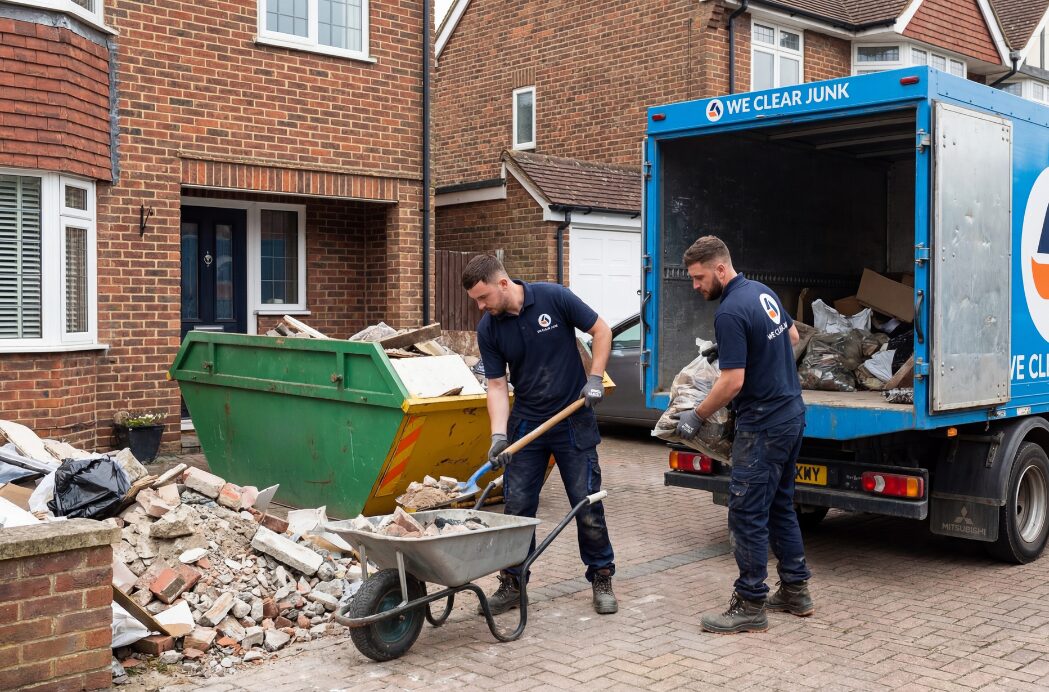
Rubble waste is a common outcome of renovation, demolition, and landscaping work. From breaking up patios to removing internal walls or clearing concrete foundations, rubble can build up quickly and become difficult to manage. Many people search for how to dispose of rubble because the process is not always obvious, especially when legal and environmental responsibilities are involved. Most people manage the job with rubble bags – this guide covers exactly how many you’ll need further down.
|
Methods |
Recycling centre, skip, rubble bag, grab lorry, or a collection service |
|
Cost |
From free (small loads) up to around £450 (large grab lorry loads) |
|
Golden rule |
Keep rubble separate from other waste for the lowest price |
|
Legal duty |
You stay responsible for it, even if someone else dumps it |
This guide explains how to dispose of rubble safely, legally, and responsibly. It is written to help homeowners, landlords, and tradespeople understand the correct options available and avoid common mistakes that lead to disposal problems.
“The biggest cost mistake we see is mixed loads,” says Darren Mercer, Operations Lead at We Clear Junk. “Keep your rubble clean and separate from wood, plastic or plasterboard, and you’ll pay a fraction of the price.”
What Is Rubble Waste?
Rubble waste refers to heavy materials created during construction or demolition. This includes bricks, concrete, cement, paving slabs, tiles, stones, blocks, and mortar. This type of waste is commonly referred to as brick rubble or construction rubble during rubble removal and rubble collection services. These materials are classed as inert waste, meaning they do not decompose or react with other substances. Got a concrete-heavy load? See our guide to disposing of concrete waste for material-specific advice.
Rubble is often confused with general builder waste, but the two are not the same. Materials such as wood, metal, insulation, plastic, and plasterboard should not be mixed with rubble – see how to dispose of plasterboard separately if that’s part of your project. Keeping rubble clean and separate is essential for safe handling and correct disposal. Ceramic tiles are, in the most part, not treated as rubble (due to their smooth sharp edges when broken, they cut tyres and aren’t classified as clean inert waste.)
Put simply, the rubble meaning covers any solid, inert leftover from building work – so if you’re wondering what is classed as rubble, think bricks, concrete, blocks and stone, not softer building waste like insulation or plastic.
Why Proper Rubble Disposal Matters
Rubble is extremely heavy and can be hazardous if left unmanaged. Loose concrete and bricks create uneven ground (trip hazards), block access routes, and most of all, slow down building work. Professional rubble removal helps keep construction areas safe and prevents unnecessary delays. Proper disposal keeps sites safer and more organised.
There is also a legal responsibility attached to waste. Anyone producing rubble must ensure it is handled correctly and does not end up dumped illegally. From an environmental perspective, responsible disposal prevents long-term damage to land and allows usable materials to be processed correctly.
How Much Does Rubble Disposal Cost?
Costs vary by method, but here’s a rough guide:
|
Method |
Typical Cost |
Best For |
|
Household recycling centre |
Free – £30 |
Small domestic loads, DIY jobs |
|
Skip hire (mini, 2–4 yd³) |
£150 – £300 |
Ongoing renovation projects |
|
Skip bag |
£99 – £180 |
Smaller loads, tight driveways |
|
Grab lorry |
£240 – £450 per load |
Large volumes, demolition jobs |
|
Rubble collection service |
From £70, priced by van space |
Flexible, no skip permit needed |
Separating Rubble Before Disposal
Separating rubble from other waste types is one of the most important steps in the disposal process. Clean rubble is easier to transport, safer to handle, and more likely to be accepted at authorised facilities.
The most common way this is done is using standard “rubble bags”. These are useful for: Moving rubble around a site (where there’s no access for large vehicles or wheelbarrows). Estimating cost – 30 rubble bags is roughly equal to 1 tonne, so builders can get quick cost estimates from the number of rubble bags filled. Eg: 90 bags is roughly 3 tonnes. Keeping waste types separate to ensure the cheapest cost. Clean rubble can be several times cheaper than mixed general waste. Mixing rubble with plastic, wood, or plasterboard often leads to rejected loads or being charged with general waste prices (usually much higher). Separation should begin at the point where waste is produced, not at the end of the project. This simple step avoids complications later.
How Many Rubble Bags Do I Need?
As a rule of thumb, most heavy-duty rubble bags (sometimes called ton bags for the bulk builder’s version) hold around 50 litres each, and 30 filled bags works out to roughly 1 tonne of rubble:
|
Rubble Bags |
Approx. Weight |
|
30 bags |
1 tonne |
|
60 bags |
2 tonnes |
|
90 bags |
3 tonnes |
|
120 bags |
4 tonnes |
If you’re filling more than a skip’s worth, a grab lorry or collection service usually works out cheaper than buying and disposing of dozens of bags individually.
Disposing of Rubble at Recycling Centers
Many household waste recycling centers accept rubble from small domestic projects. This is often the first option people consider when searching where to get rid of rubble from small DIY or renovation jobs. Bricks, concrete, stones, and tiles are usually accepted when they are free from contamination.
There may be limits on how much rubble can be disposed of per visit, and some councils apply additional rules for waste generated from building work. Checking local guidance before travelling helps avoid unnecessary issues.
When transporting rubble, it must be secured properly. Vehicles should not be overloaded, as rubble weight can affect safety and vehicle control.
Disposing of Rubble using Skip Hire
Skips are widely used during renovation and construction work because they allow rubble to be collected gradually. This method is commonly used for rubble collection and hardcore collection during building projects. This keeps the site clear and prevents waste from spreading across the work area.
Because rubble is heavy, only skips designed for inert materials should be used. These skips are built to handle concrete, bricks, and masonry safely. Mixing other waste types into the skip can cause problems during collection and processing.
Skips placed on private land usually require no additional permission, while placement on public roads may require approval. Not sure what size to book? Our skip hire prices guide breaks down typical costs – or skip the permit hassle altogether with a rubble collection service instead.
Disposing of Rubble in a Skip Bag
Skip bags are a practical solution for smaller projects where rubble builds up over time. They are commonly used for garden landscaping, minor renovations, and DIY work.
A skip bag can be placed on a driveway or other private area and filled as work progresses. Only rubble should be placed inside, and the bag must not be overfilled. Exceeding weight limits can make collection unsafe. Or if too far from the road, the skip bag lorry may be unable to collect, and you’ll need to book a man and van service where loading is included.
Once full, the bag is collected and the rubble is taken through authorised disposal routes where it is processed correctly.
Removing Rubble Using Grab Lorries
Grab lorries are ideal for removing large volumes of rubble quickly. They are frequently used for large-scale rubble removal and hardcore collection where heavy materials such as brick rubble and broken concrete are involved. They are often used for driveway removals, foundation work, and major building projects.
A hydraulic arm lifts rubble directly into the vehicle, removing the need for manual loading. For this method to work efficiently, rubble must be piled in an accessible location, such as near the front of a property.
Rubble collected by grab lorry must be kept free from soil and mixed waste to ensure smooth removal and correct processing.
How Is Rubble Removal Different From Soil Removal?
Nowadays with purer segregation and higher costs for mixed waste, rubble and soil are treated more separately in waste management. Rubble consists of solid, inert materials such as concrete and bricks, while soil is classed as excavated waste and often contains organic matter.
Soil is affected by moisture levels and contamination, which can complicate disposal. Wet soil is heavier than rubble and may require additional assessment before removal. Mixing soil with rubble can lead to rejection at disposal facilities.
For this reason, rubble and soil should always be kept separate from the start of a project. Many projects require specialised soil and rubble removal near me services to ensure both materials are handled correctly.
Rubble vs Soil vs Garden Waste vs Plasterboard
Here’s how rubble compares to the other waste types people often mix in by mistake:
|
Material |
What It Is |
Mix With Rubble? |
Where It Usually Goes |
|
Rubble |
Bricks, concrete, blocks, stone |
– (this guide) |
Recycling centre, skip, grab lorry |
|
Soil |
Excavated earth, often with organic matter |
No |
Specialist soil disposal |
|
Garden waste |
Green waste, cuttings, turf |
No |
Garden waste collection |
|
Plasterboard |
Gypsum wallboard |
No – reacts badly in landfill |
Separate plasterboard disposal |
Why Fly-Tipping Rubble Is a Terrible Idea
Aside from being illegal to fly tip, dumping rubble can also cause serious long-term damage. Concrete and bricks do not break down naturally and can remain in place for years, damaging land, blocking drainage systems, and creating safety hazards. For the full legal picture, see why fly-tipping rubble is illegal under UK law.
Even if someone else dumps the waste, responsibility can still fall on the person who produced it. This means using “very cheap rubble disposal” or allowing rubble to leave a site without proper control can result in serious consequences.
Responsible disposal ensures rubble is taken to authorised facilities where it is handled safely and does not harm communities or the environment.
The best form of “reuse” for rubble, is when you require some aggregate onsite to: fill a foundation or a base for a patio or drive, or for filling pot holes in a drive way. In this way, you turn your waste into a useful product with no Co2 emissions from transport or processing.
How Rubble Is Responsibly Handled After Collection
When rubble is removed correctly, it enters a controlled waste system. Licensed rubble collection companies ensure materials such as brick rubble and broken concrete are processed responsibly. Clean materials such as bricks and concrete are assessed and directed to appropriate facilities, where they can be processed for reuse in construction and groundwork projects.
This approach reduces environmental impact and prevents waste from being dumped illegally. It also supports responsible concrete disposal near me services that recycle usable construction materials. Keeping rubble separate and using recognised disposal methods ensures it is managed safely from start to finish.
Hazardous Materials and Rubble Disposal
Some materials that resemble rubble may contain hazardous substances, particularly in older buildings. Asbestos-containing materials must never be mixed with general rubble waste. If you suspect asbestos, see our guide on safely disposing of asbestos before doing anything else.
If there is any uncertainty about the presence of hazardous materials, professional assessment is essential before disposal begins. Mixing hazardous waste with rubble can contaminate entire loads and create serious health risks.
Legal Responsibility for Rubble Disposal
The duty of care for waste remains with the person who produces it. This applies to homeowners and contractors alike. Rubble must be handled responsibly and disposed of through authorised channels.
Ensuring rubble is collected, transported, and processed correctly protects you from legal issues and supports responsible building practices across the UK.
Conclusion
Knowing how to dispose of rubble properly makes any building or renovation project safer and more efficient. Rubble requires careful separation, planning, and responsible handling to avoid legal and environmental problems.
By keeping rubble clean, choosing suitable removal methods, and avoiding illegal disposal, you can manage waste confidently and responsibly from the start of your project to its completion.
Ready to get rid of your rubble? book a rubble collection with We Clear Junk – priced by van space, not by the hour, with same-day slots across London.
FAQs
What types of waste are included in rubble removal?
Rubble removal usually includes bricks, concrete, stones, blocks, paving slabs, and other heavy construction materials produced during renovation or demolition work.
Can rubble collection be arranged for small home projects?
Yes, rubble collection services are available for small DIY projects such as patio removal, garden landscaping, or minor building work.
Can mixed waste be included with rubble collection?
No, rubble should usually remain separate. Mixing materials like wood, plastic, or plasterboard with rubble can increase disposal costs.
Can rubble be recycled after collection?
Yes, much of the material collected during rubble removal, including concrete and brick rubble, can be processed and reused as recycled aggregate.
How much does rubble removal cost in London?
The cost of rubble removal in London depends on the volume, weight, and type of materials such as brick rubble or concrete. Small domestic jobs are usually cheaper than large construction clearances.
How many rubble bags equal a skip?
A standard 2-yard skip holds roughly 20-25 filled rubble bags, and a 4-yard skip around 40-50. If you’re filling more than that, a skip or grab lorry usually works out more cost-effective than bagging everything individually.
Can I put rubble in my black bin?
No. Rubble is too heavy and bulky for household black bin collections, and most councils won’t take it as general waste. It needs to go through a recycling centre, skip, rubble bag, or a licensed rubble collection service instead.
What's the difference between rubble and hardcore?
Hardcore usually refers to broken rubble, such as crushed concrete or brick, that’s been compacted and reused as a sub-base for driveways, patios, or foundations. Rubble is the raw material; hardcore is what it becomes once it’s crushed and reused on site.